Introducing Radio Visualiser: A Real-Time Tool for Multi-Radio Network Topology
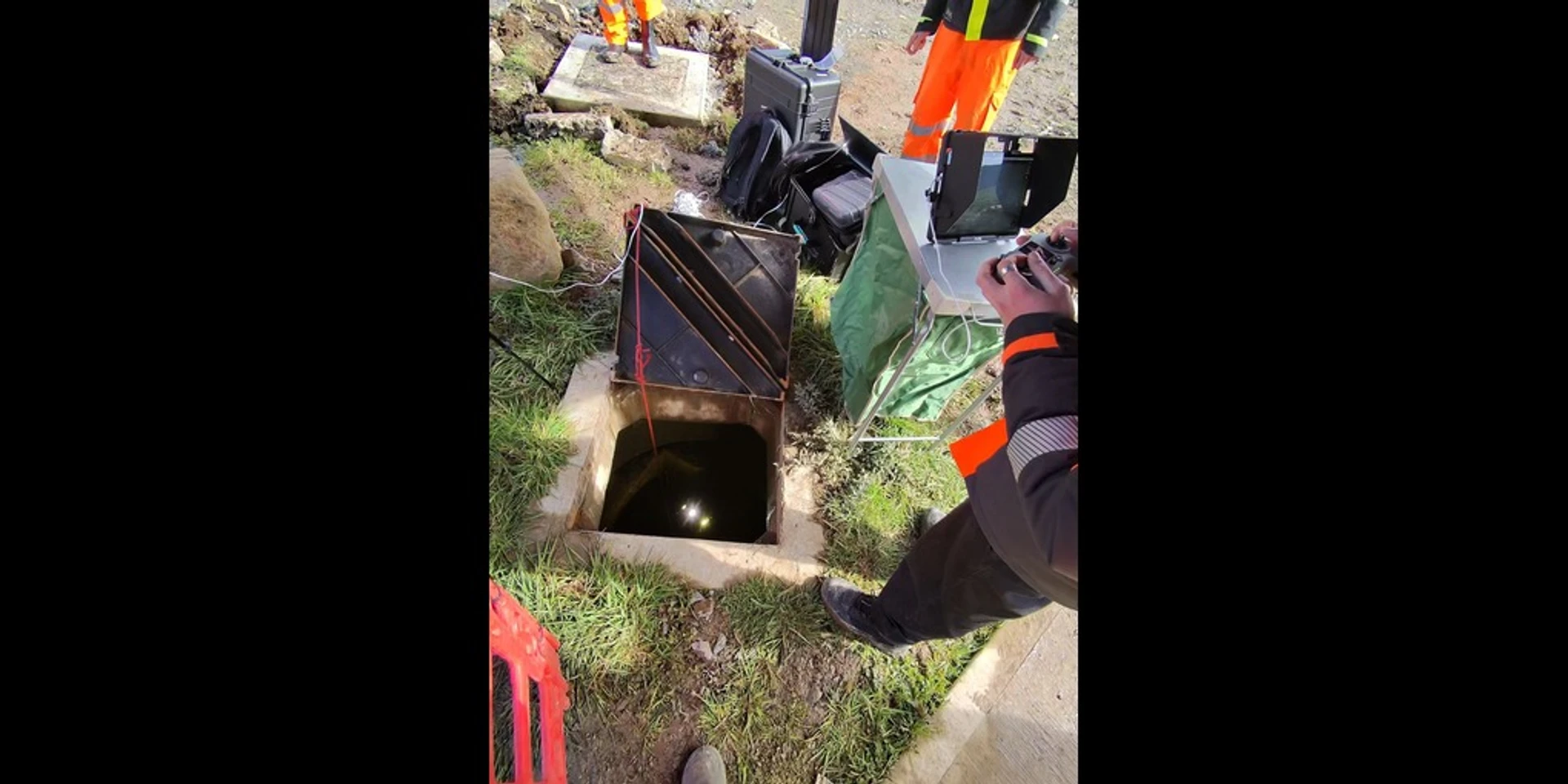
Radio Visualiser is for the operation of unmanned systems in environments where traditional communications struggle, such as underground sewers.
These environments place constraints on how robots and drones can be used.
To work within these constraints, mesh radio networks form a connected system to extend through the environment.
Radio Visualiser was built to make these networks easier to deploy, understand, and manage in the field.
Why Radio Becomes Necessary Underground
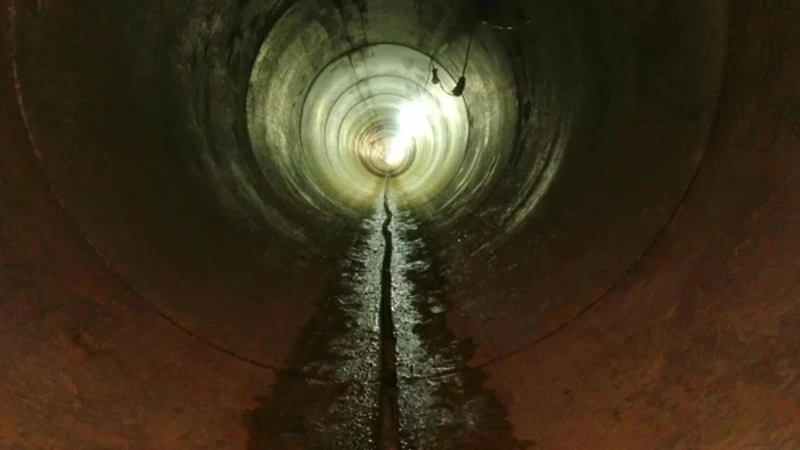
In underground environments, GPS and Wi-Fi are unavailable, and wired approaches are not practical because cables restrict movement around corners and junctions.
In practice, this makes radio the best method for maintaining control and receiving data.
Radios are usually set up to connect back to a base station or a single fixed point. As you move further away, that connection degrades and eventually drops.
This is more pronounced underground, where signal propagation is affected by tunnel geometry, construction materials, and distance. Straight sections, junctions, and changes in elevation all influence performance.
We resolve this challenge by placing multiple radios along the route. As the unmanned vehicle moves, the connection is handed from one radio to the next, maintaining our ability to control it as it progresses through the structure.
This approach allows us to extend connectivity through complex environments, but as more radios are introduced, the difficulty shifts from establishing links to understanding them.
The Problem: No Network-Level Visibility
Each radio can be accessed individually, but the network cannot be easily understood as a whole. Operators must log into devices one by one and piece together how radios are connected and how links are performing.
Without a clear view of network behaviour, identifying where and why performance degrades becomes slow and uncertain. Configuration changes are harder to manage, and their effects are not always immediately visible.
This becomes a limiting factor in the field.
Introducing Radio Visualiser: Systems-Level Control
Radio Visualiser addresses this gap.
It provides a single interface where multiple radios can be cadiscovered, grouped, and managed together. More importantly, it makes the network visible as a system rather than a set of individual devices.
Radio Visualiser is designed to work with Doodle Labs radios.
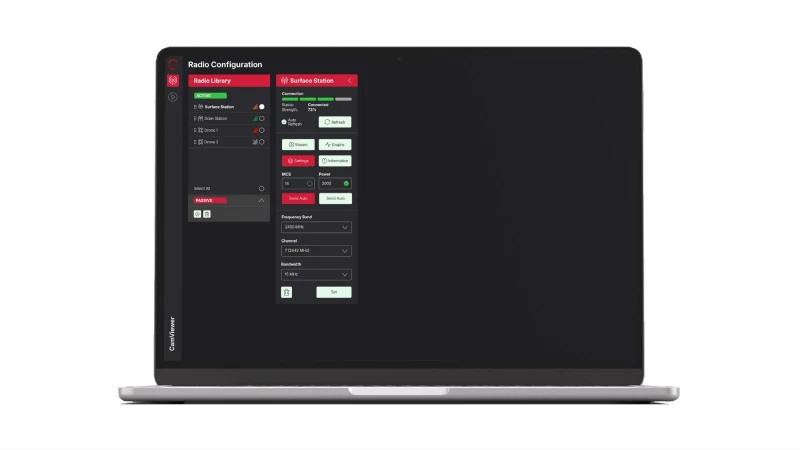
Operators can see how many radios are connected, name them, monitor link performance, and apply configuration changes across the network without switching between tools.
The focus is on making network behaviour observable and controllable in real time.
Why It Matters
As multi-radio deployments scale, the ability to understand and manage the network becomes as important as the radios themselves.
By making network behaviour visible, operators can make informed decisions in real time, rather than reacting after performance degrades.
We built Radio Visualiser for use in our own operations and are now making it available more broadly.
If you are working with multi-radio deployments and need better visibility into how your network is behaving, you can download it here: Radio Visualiser.
14/04/2026 Chris Burgess